Caliper leaking on an older car? What the rebuild versus replace math looks like
Brake Parts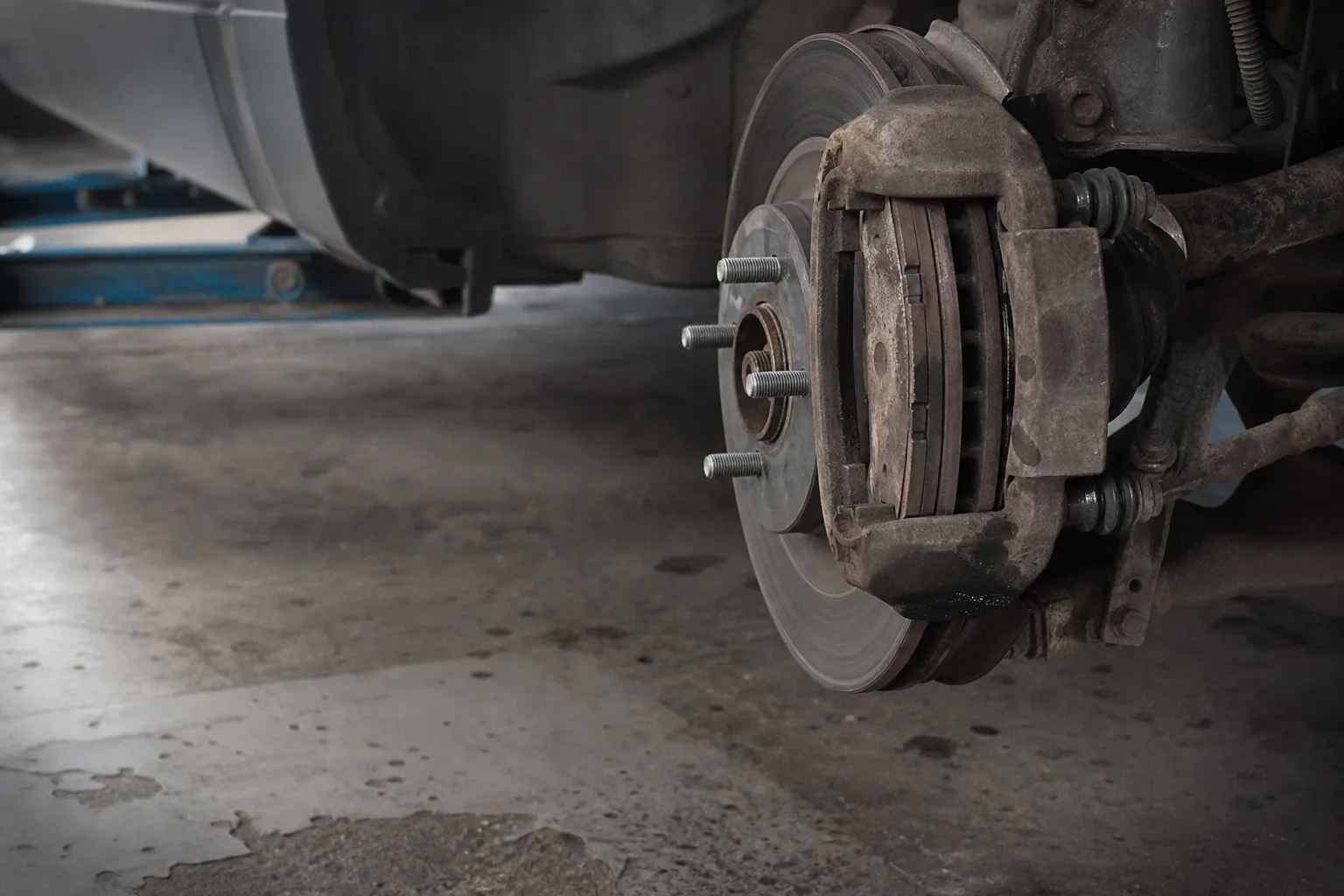
- Bore pitting as the deciding factor
- Corrosion craters on the surface the piston seal rides against will keep weeping no matter how good the new seal is. Any visible pitting in or near the seal groove turns a rebuild into a replacement.
- Core charge is a deposit
- The core charge on a remanufactured caliper is refunded when the old unit is returned intact and within the return window. It only becomes a real cost if the casting is cracked, the bleeder is snapped off, or the box never goes back.
- Seized slide pins
- On floating calipers, pins that no longer move freely cause uneven pad wear long before the piston seal fails. A piston seal kit does nothing to address them.
A caliper that has started weeping at the piston seal presents two spending decisions, not one. The first is the part: a seal kit that costs less than a restaurant meal, or a remanufactured unit that costs several times more before the core charge is settled. The second is the labor, and that is where the two routes stop looking similar. The kit is cheap and slow. The reman unit is dearer and fast. Which one wins depends almost entirely on what the bore looks like when the piston comes out, and nobody knows that until it does.
What the bore tells you before anything else
Pull the piston, wipe the bore with a clean rag, and hold a light at a low angle. A serviceable bore is smooth, uniformly gray or honed-looking, with the seal groove crisp at both edges. A bore that has been sitting with moisture-loaded fluid shows pitting, usually a band of small dark craters at the depth where the piston rested. Pitting inside the seal groove, or pitting on the sealing surface the square-cut seal rides against, ends the rebuild conversation. Honing removes material and changes clearance, and a bore that needs honing to look right is a bore that has already lost its dimension.
Sliders, brackets and the parts the kit does not include
Most cars with a single-piston floating caliper fail at the slide pins long before the piston seal gives up. The pins seize in their bores, the rubber boots split, water gets in, and the caliper stops centering, which shows up as one pad worn to the backing and the other barely touched. A seal kit for the piston does nothing about this. Some kits include pin boots, many do not, and slide pins themselves are usually a separate order tied to the bracket casting. A careful reader checks the kit contents line by line: piston seal, dust boot, boot retaining ring, bleeder cap, sometimes a bleeder screw, and often nothing else. The bracket, the hardware clips and the copper washers at the hose are all separate.
The two invoices, side by side
Take a common front caliper on a fifteen-year-old compact. A seal kit is typically in the range of a fast-food lunch to a tank of gas; a remanufactured caliper commonly runs several times that, plus a core charge that is refunded when the old unit goes back in the box. The core charge is not a cost, it is a deposit, but it is real money if the old caliper is cracked, if the bleeder snapped off, or if it sits in the trunk past the return window. Assume the core comes back. Then the parts gap is real but modest, often in the tens of dollars per corner rather than hundreds.
Labor is the larger number. A shop replacing a caliper with a reman unit is doing a hose disconnect, a bracket bolt or two, a hang, and a bleed: roughly an hour per corner at book time, sometimes less on a car with good access. A shop rebuilding in place adds piston removal, bore inspection, cleaning, seal fitting, and pin service, and it adds the risk of discovering mid-job that the bore is unusable, which converts the rebuild into a replacement with the rebuild time already spent. At typical shop rates, that extra hour or two erases the parts saving several times over.
Where each route actually makes sense
Rebuilding pays when the labor is yours and free, when the bore is clean, and when the part is hard to source: rear calipers with integrated parking brake mechanisms, obsolete applications, and anything on a vehicle where the reman catalog has gone quiet. It also pays when the failure is clearly external, a torn dust boot caught early, before water reached the bore. Replacement pays when a shop is doing the work, when the car has more than one suspect corner, or when the bore shows any pitting at all. Braking performance on the road is regulated by the National Highway Traffic Safety Administration, and the standard a rebuilt caliper has to meet is the same one a new part meets: full pressure, no weep, even pad wear.
Inspect first, then commit. The five minutes spent looking down a clean bore with a flashlight is what separates a considered choice from a job done twice.